Flights RomeFlight paths from anywhere to Rome
1Roads in
the Sky
Even pilots have to follow highways
Flights to Rome is our follow up to one of the biggest unsolved quests of mobility: Do all roads lead to Rome?! We've explored this question on a global scale and found a route from anywhere in the world!
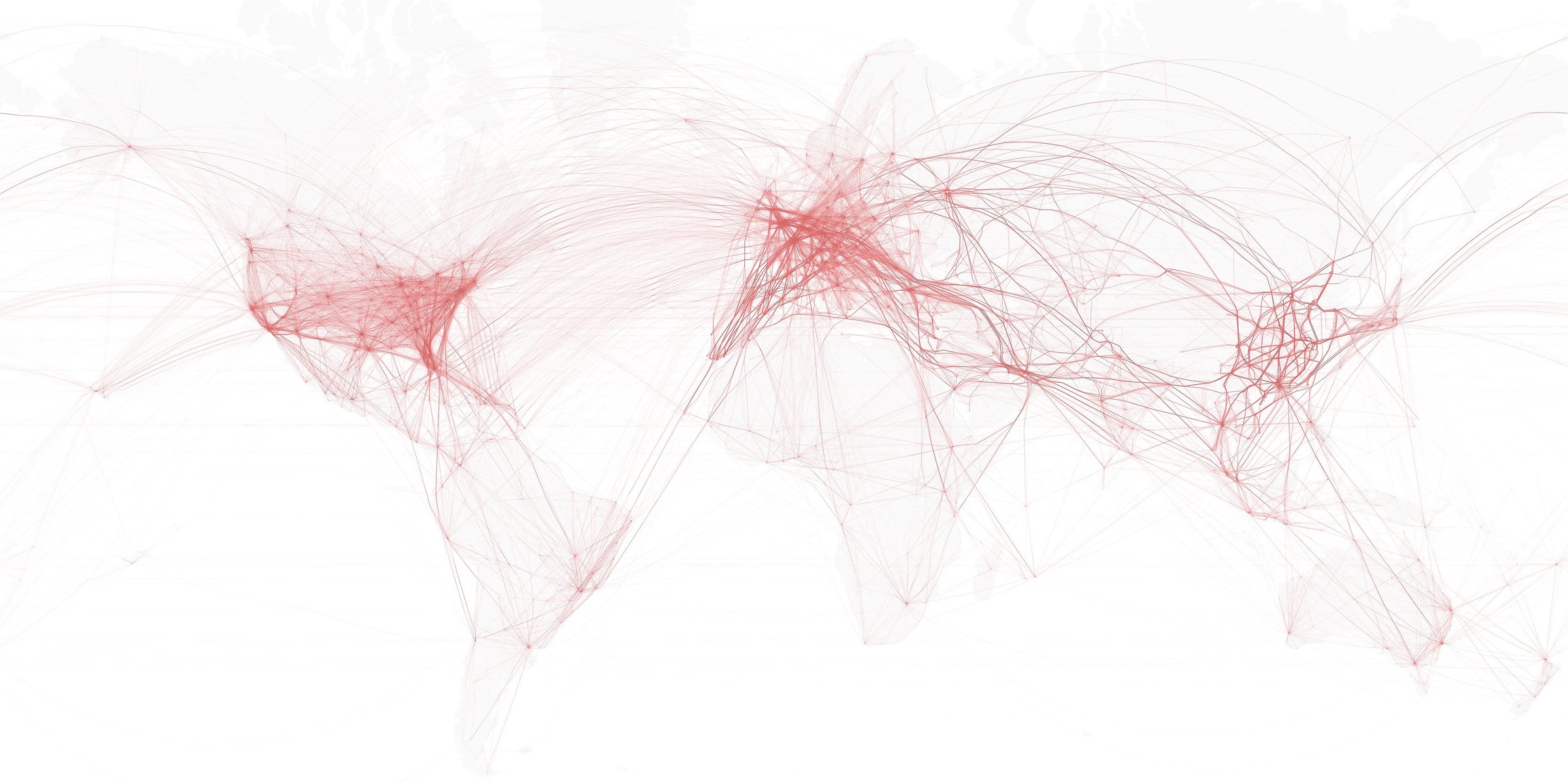
Starting at 712.425 locations spread evenly around the globe, we calculated routes from everywhere on the planet. Intermodal routes are calculated to the airport based on the OpenStreetMap road network. From there on a flight network shows all flights to Rome. The network was created with data of Flightradar24. Flights to Rome is a project between data visualisation and art.



2Up in
the Air
How high do planes fly?
How far do they travel?
About 20 km after a plane is airborne the local control sitting in the airports tower hands over to regional ground control. Aircrafts are then sequenced and bundeled in flight corridors according to destination. Weather conditions, high traffic volume and crossing traffic can make it very complicated.
Depending on local regulation, approaches are handled differently by local control. Oman for example has a very long approach, while heavier traffic requests steeper descents.



3 Flights
to Metropolis
What happens if every
citizen visits its own capital?
Next to Rome we chose two other global cities to calculate routes to, which promised to shed lights on different parts of the world. Tokyo and New York are metropolises that have a highly frequented air spaces. The three different levels of detail allow for interesting perspectives to appear at the three locations.

4 Flights
to Rome 3D map
From far out to up close
Browse the Flights to Rome web map and find out about your own route to Rome. The 3D map let's you explore all the details world wide. You'll see all roads leading to the nearest airport. From there on find the red flight routes leading to Rome.
5 Flights
to Rome
You are now entering Europe.
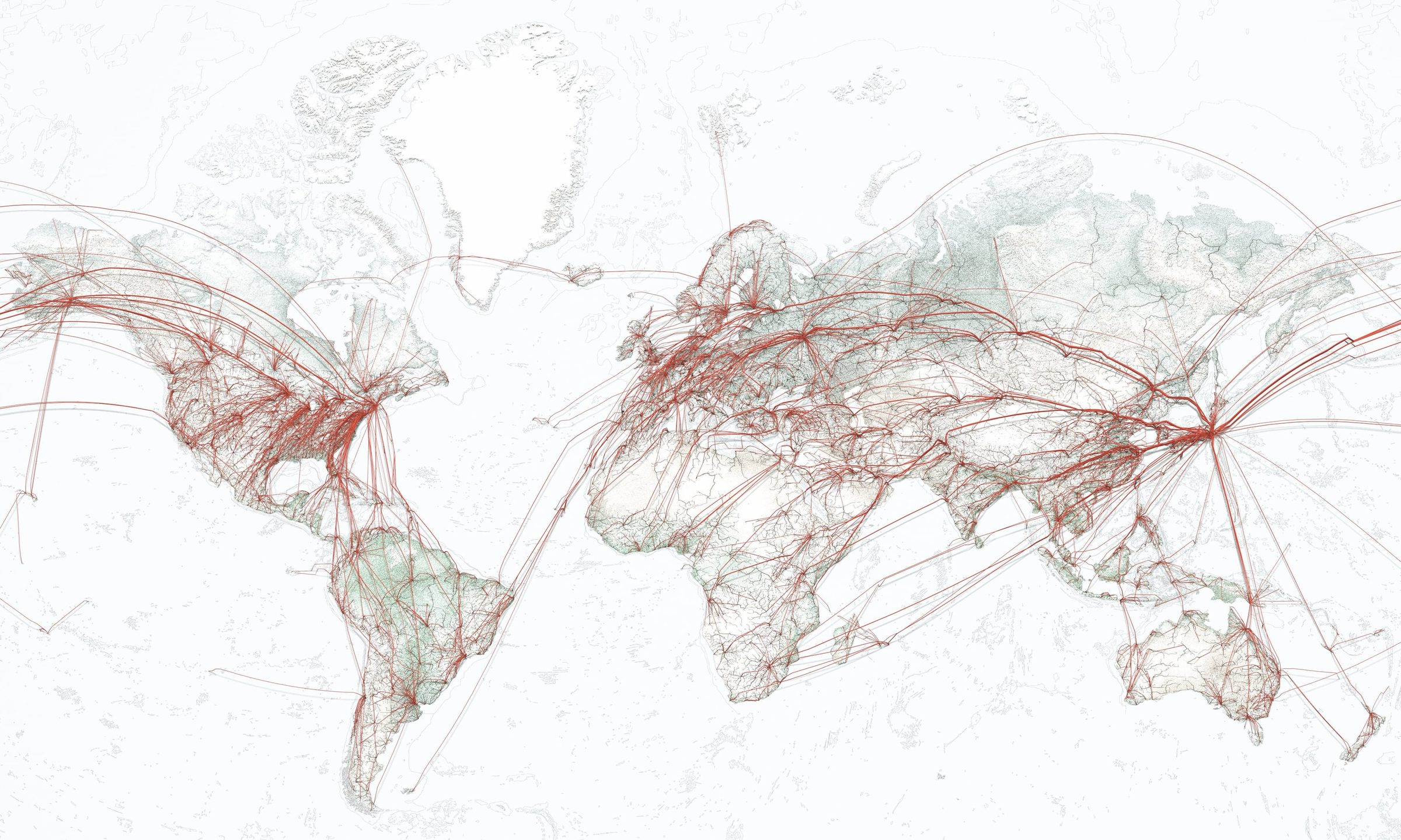
The proverb “All roads lead to Rome” is rooted in the Golden Milestone, which used to mark the center of the Roman Empire. Transferring this to the global flight network results in the picture seen below.


“Entering Europe” looking at incoming traffic to Rome on a global scale, certain entry nodes can be identified.
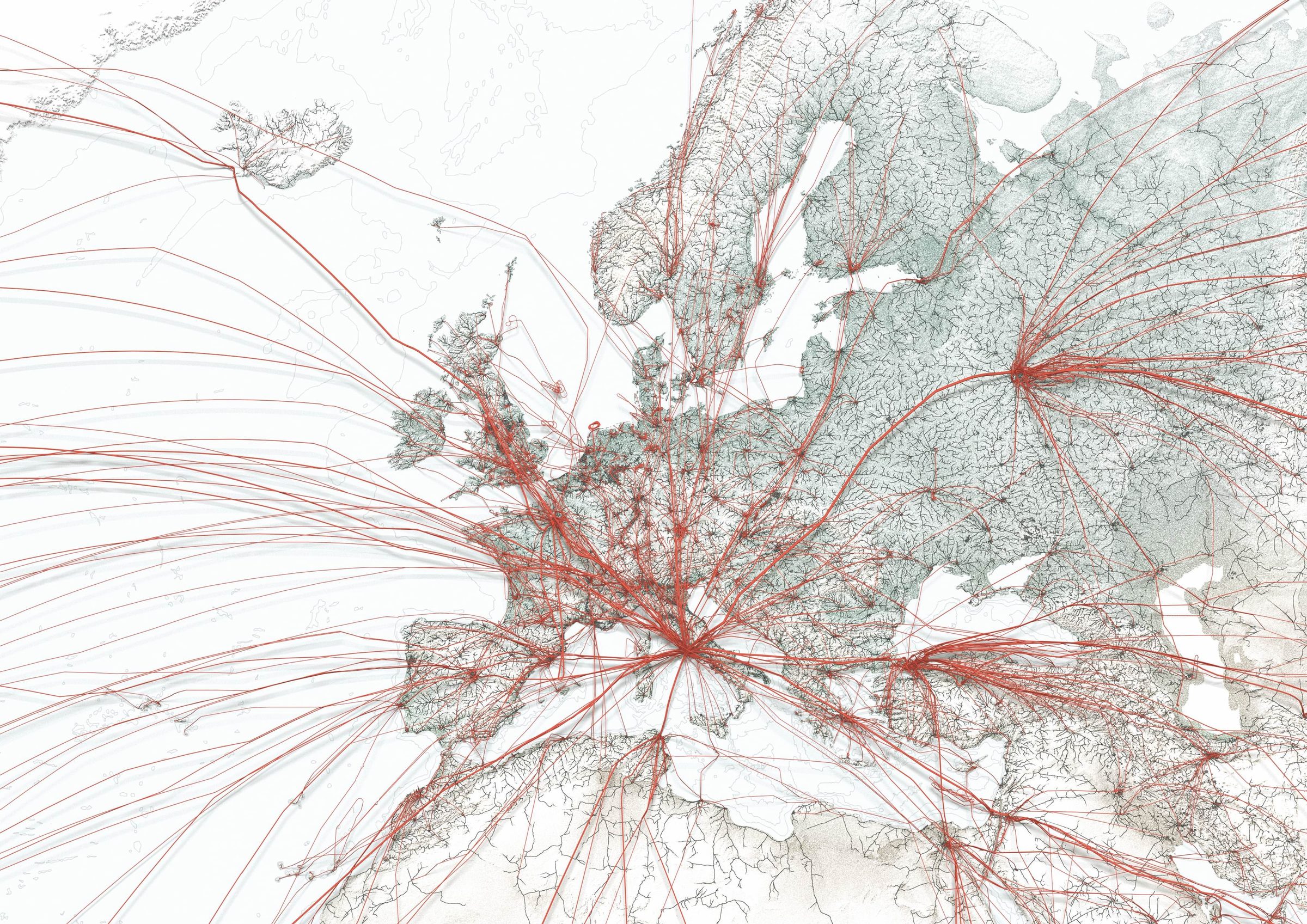

Eastern traffic tends to enter via Moscow. Connections to the west are more diverse and not as bundled. Note also how all east coast traffic is routed via Iceland, while west coast origins fly in via Paris and London
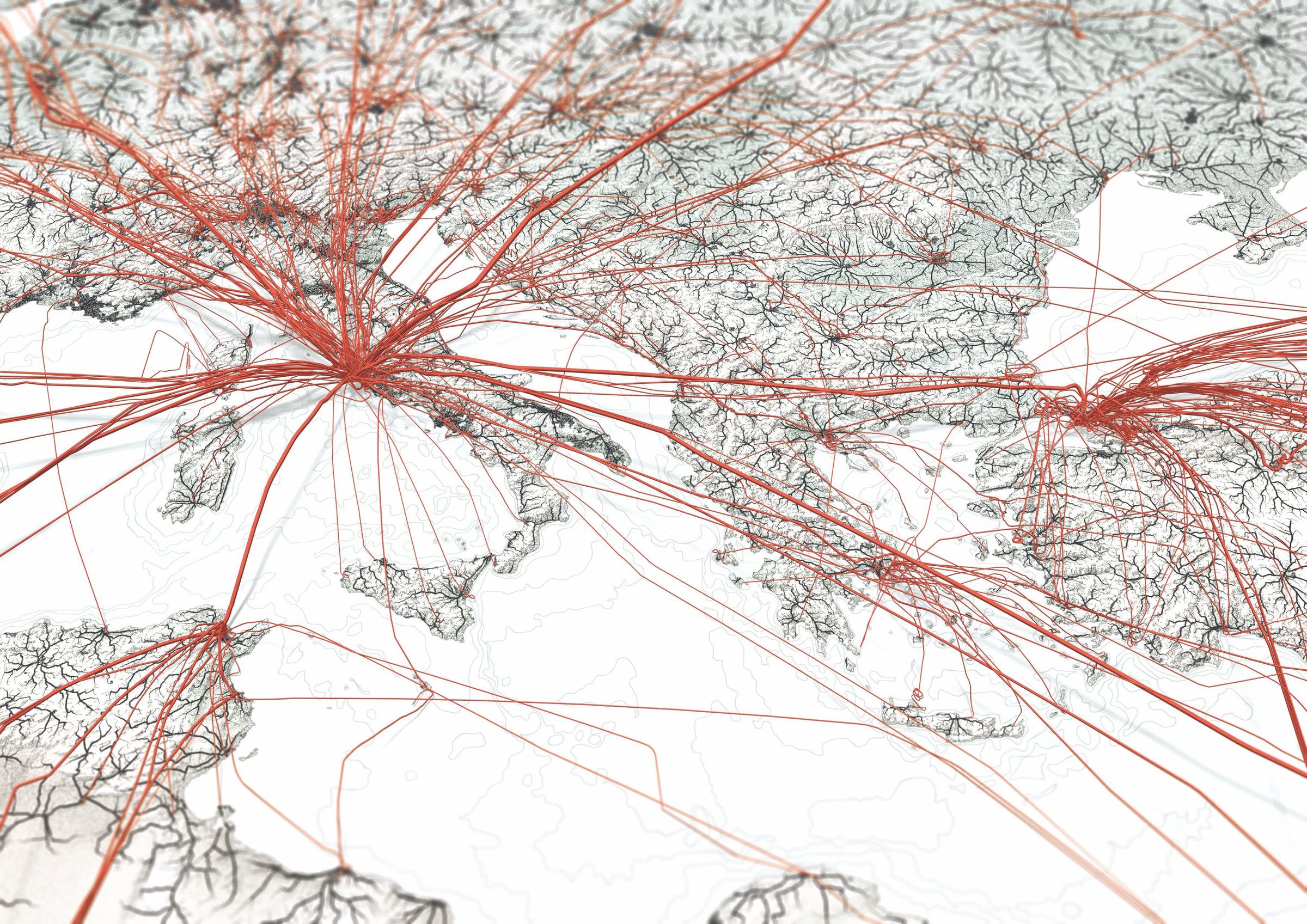

Far eastern and Indian traffic flows enter via Istanbul while some southbound traffic is bundled in Tunis.
6 Flights
to New York
“Let's spend the weekend in NYC.” – Said everybody!
New York City was the destination of almost 13 million visitors in 2017. It is one of the most popular destinations in the US.
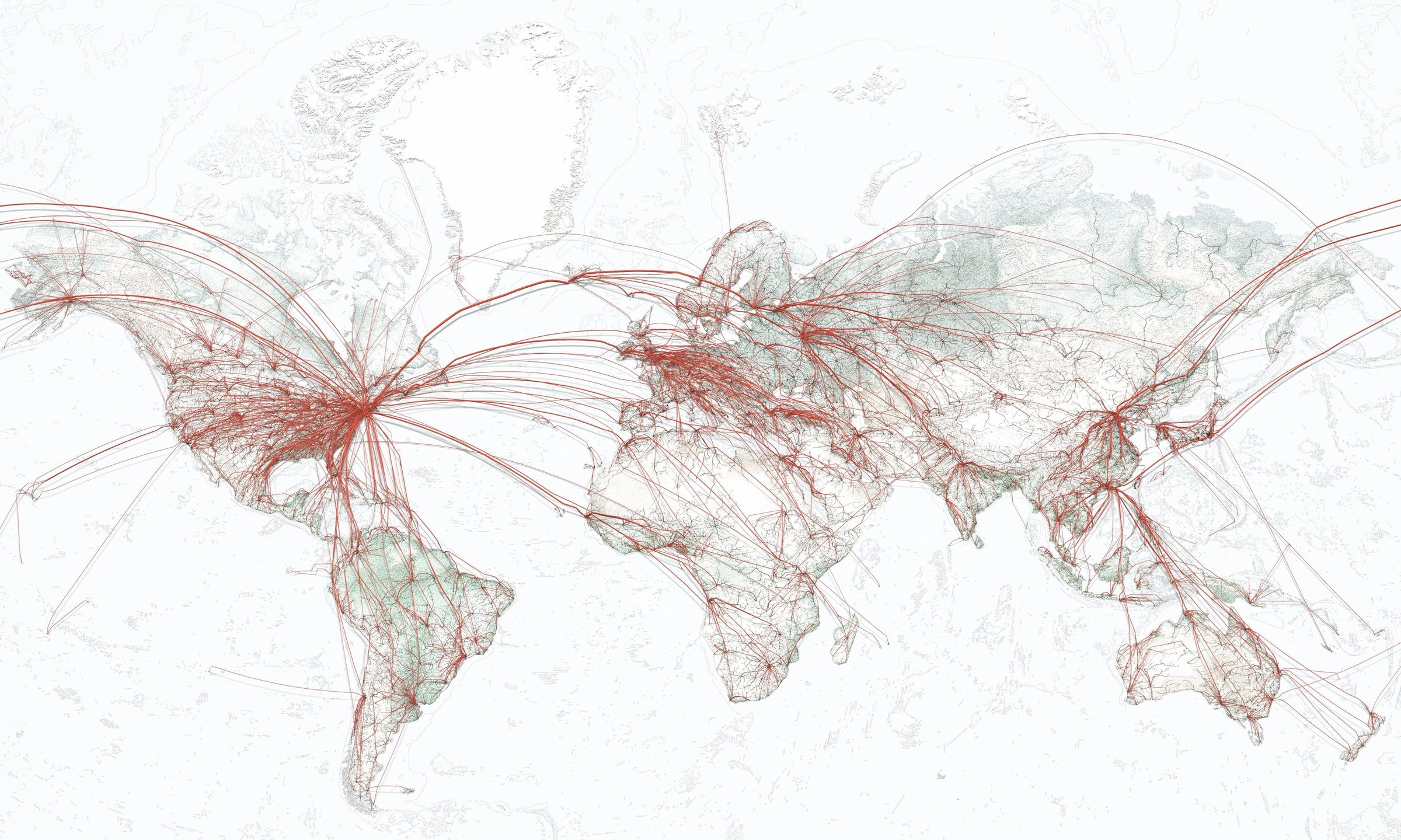

If all the 13 million visitors were spread evenly around the globe, their travel patterns would look a little like this.
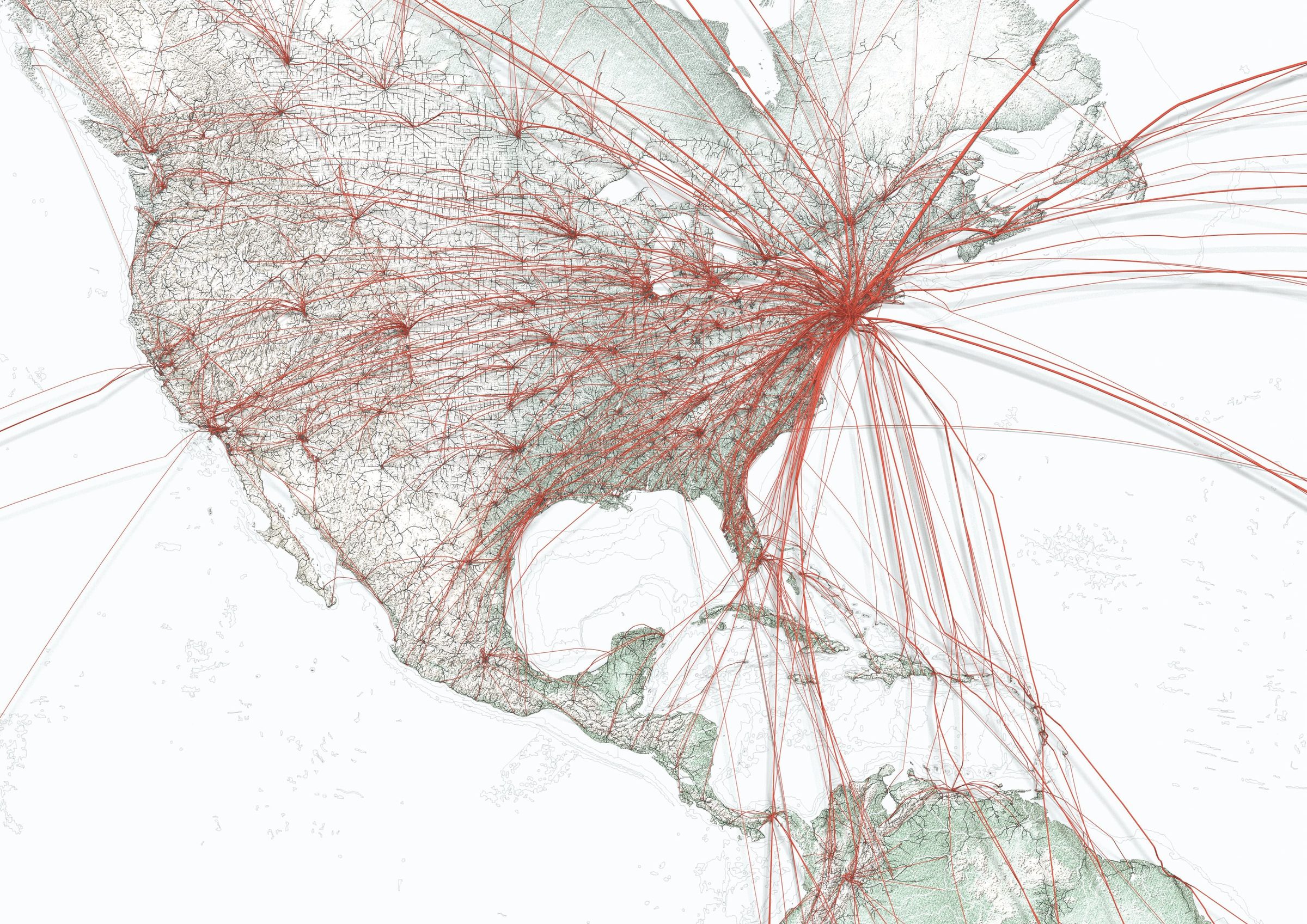

The travel patterns of the US Mainland only.
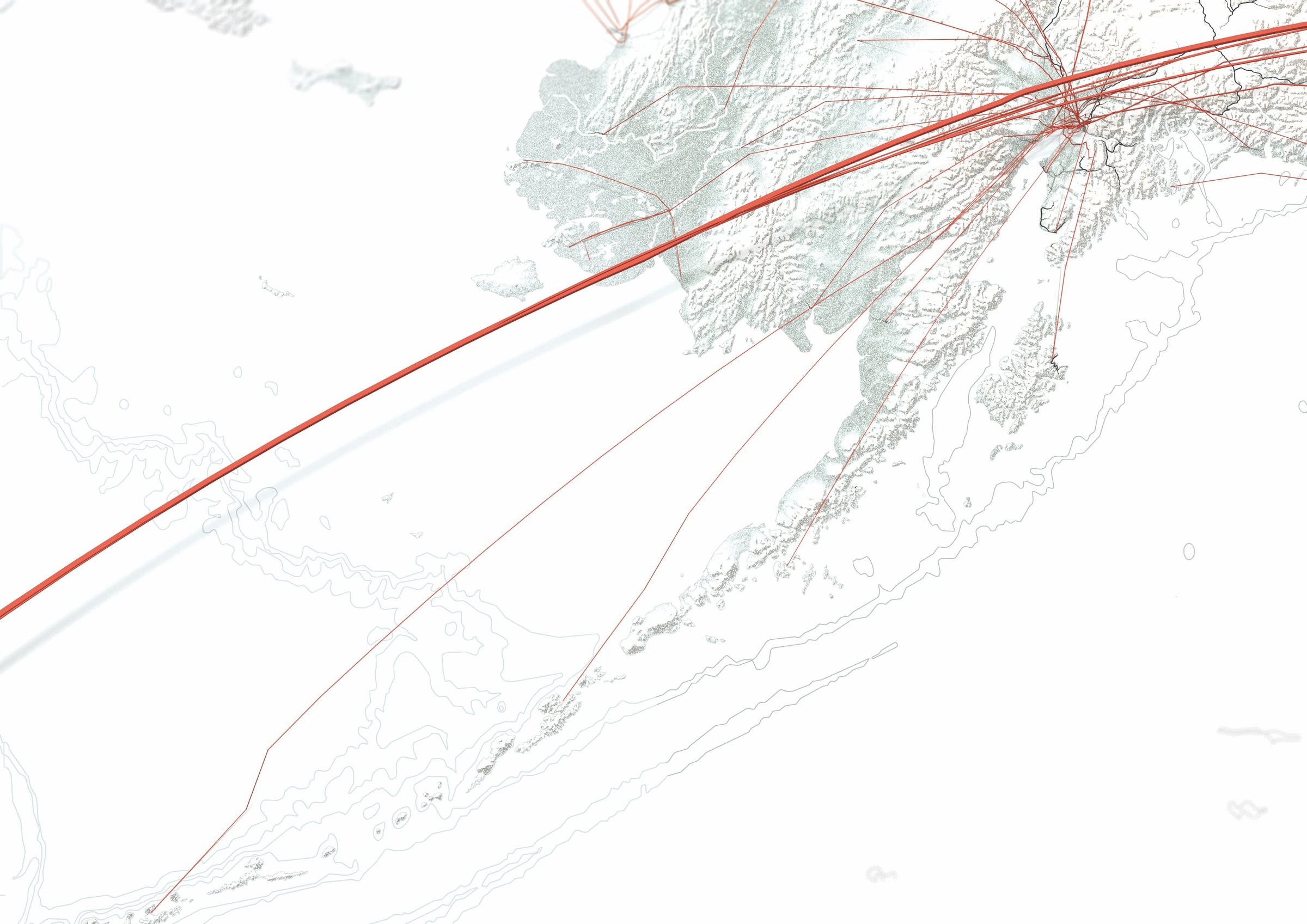

“Leaving Alaska” - In remote (yet domestic) areas like Alaska, we still find that a lot of small airports connect to one main hub, Anchorage in this case. Due to the harsh and vast environment the land route can be very difficult. Travellers from Anchorage would have to transfer to another connecting flight in order to get to New York City. For Alaskans air traffic is an essential way of travelling.
7 Flights
to Tokyo
The Land of the Rising Sun. Left or Right?
To reach east you must go west. At least for most travellers from North and South America this is the case. Interestingly only travellers from west Brazil actually fly east to visit Tokyo in the Far East.

Air Traffic in Areas of Conflict – In a close up on Japan it is easy to see how cautiously air traffic is regulated, note the flows in areas of political conflict.
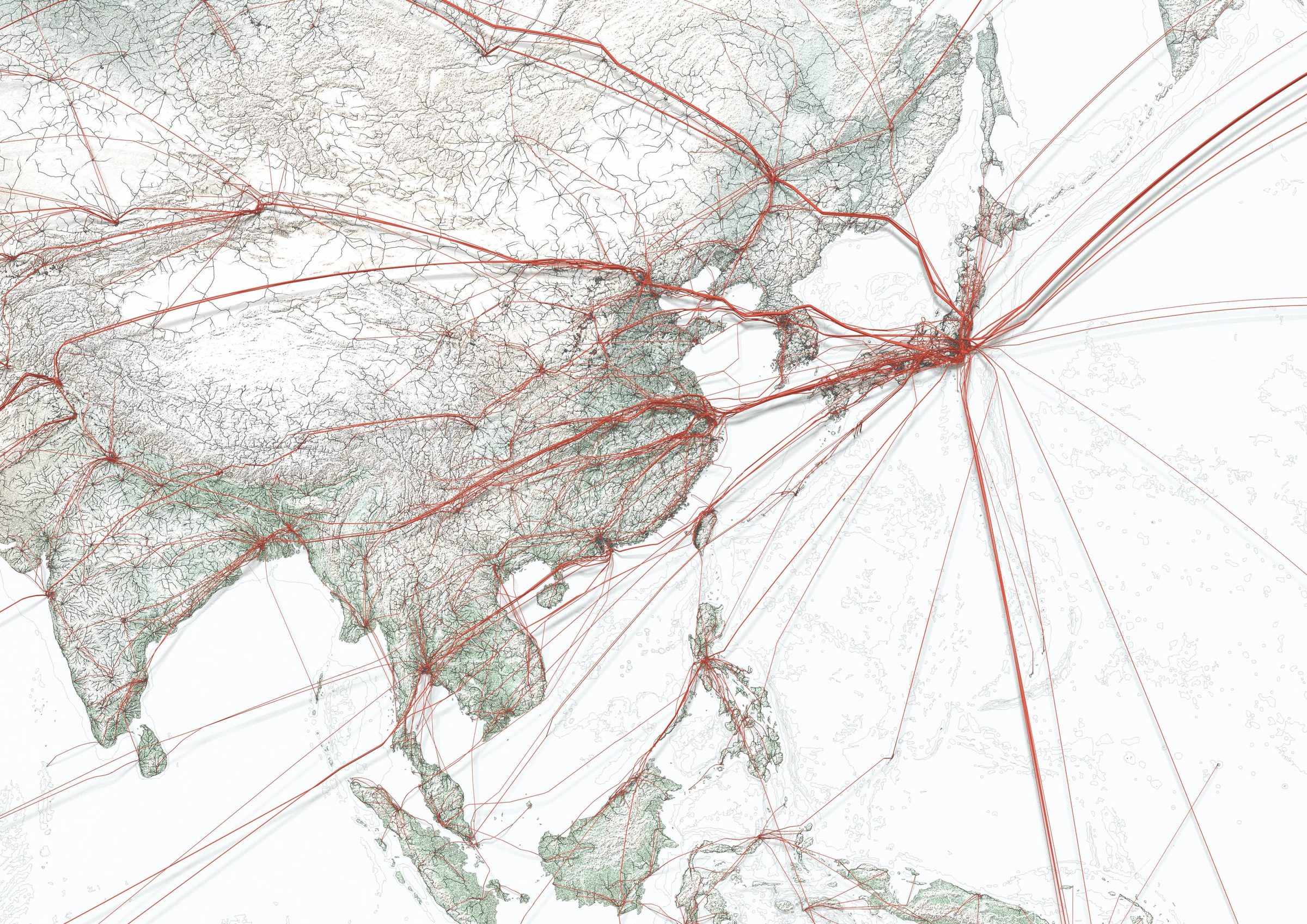

Aircrafts approach in very specific streams. While North Korea lifted its ban on foreign airplanes over their territory in 1997, there are several bans from international aviation organisations on the area.
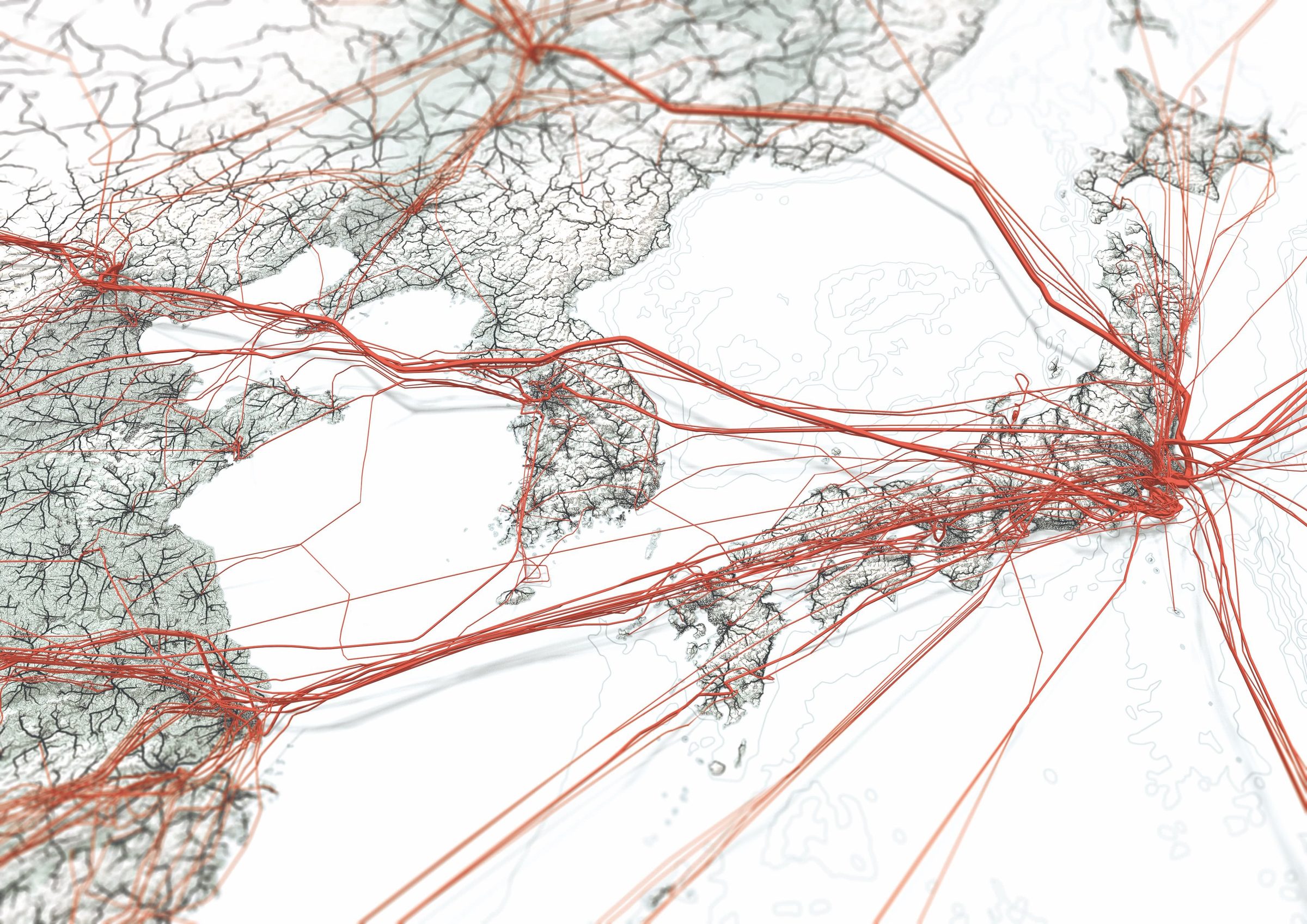

The main reason for the ban is the erratic and sometimes unannounced missile testing in the region.
8 An Airborne
Pilgrimage


* Source data Jan 9 to 15, 2017. Data courtesy of FlightRadar24
9 Remote Airports
in Beautiful Places
Also people on magical small islands sometimes want to leave.
When calculating the roadway from every place on earth to the nearest airport we eventually ended up with the most remote airports. Book a flight here, if you've had enough of Rome, New York or Tokyo.
10Making-Of
If you would like to know more about what we had to do to create these images please check out our blog post. We tried to document every step from data requirements, protoypes, data wrangling up to finding a visual style. Read more on our blog.
11About


The questions, if all roads actually do lead to Rome bothered Benedikt Groß for quite a while
With the support of Stephan Bogner the two set out on a digital navigation quest.
The results of this quest are the maps documented by Raphael Reimann on the pages you are currently viewing. Benedikt and Raphael are members of moovel lab.
With
&
Tools & Software
Many thanks to the following (open source) tools, which made the realisation of the project possible!